Inhuman Swill : Family

Main

September 19, 2012

Elsie Marie Rigby Partridge (1917-2012)

elsie_rigby_partridge.jpg My grandmother, Elsie Marie Rigby Partridge, passed away early Sunday morning. She was 95 years old, going on 96. She was raised in the farmlands of Idaho, where she had seven brothers and one sister, not to mention five stepbrothers and a stepsister. She had five children, three of whom lived to adulthood, including my mother. She had 18 grandchildren and 47 great-grandchildren.

She suffered a stroke about ten years ago and had been in a wheelchair ever since. Her mind was still mostly sharp, but she had gradually lost the ability to much for herself. Between that and my grandfather's passing five years ago, she had been praying for the end to come—mostly with good humor, at least on the occasions when I was able to visit her.

Grandma Partridge was a strong, funny, acerbic presence, one of the few people who could go toe to toe with my dad in the sarcasm sweepstakes and put him in his place. (She was his mother-in-law, after all.) She trained as a nurse before getting married and having kids, but I'd never call what she did settling down. As a child when we would visit, I remember all us kids looking forward to when Grandma would get home from work in her nurse's uniform. We were also always delighted to hear her talk about how she'd trained herself to say "shhh-ugar!" when she was mad, instead of the farm word she'd picked up from her many brothers.

One of my clearest memories of her comes from when Laura and I last visited her together, in early 2011. She would usually tire after a brief visit, but that day she was on, and she told us stories for a couple of hours. My favorite was about when she was a young mother living in Queens, where Grandpa's job had taken the family. This had to be sometime in the mid-1950s. She was driving with her three kids in the car on one of those outer-borough parkways that are still confusing to this day if you don't know your way around. She missed her exit and rather than risk getting lost put the car in reverse and tried to back up to where she had needed to get off. When another driver stopped and chewed her out, she played the just-a-lost-farmgirl-from-Idaho card and managed to escape the parkway unharmed.

If there is a better place after this one, I'm sure my grandmother is there, salty farm words or no.

death | deaths | family | obits

March 20, 2012

Blueprint for murder?

Like many writers, I have long had the habit of keeping notes about future story ideas. I was probably 17 or 18 when I had an idea for a story about man whose many siblings are one by one being picked off by an unknown assailant. The man grows increasingly paranoid and isolated as each one dies, until at last he is the only sibling left. We come to understand that the story has unfolded over the course of a lifetime, and the only assailant is implacable death itself. My note for the story was probably something along the lines of "Brothers and sisters murdered one by one."

Like many fathers, mine long had the habit of going through my stuff from time to time. So it was that my father sat me down one night with a solemn look on his face, waved my story notes, and said, "Are you planning to kill your brothers and sisters?"

As the eldest of eight kids, I admit that I did not take much interest in my family, and I did keep to myself as best I could and keep my many creative pursuits secret. But was that chicken or egg? Was I like that because I had to put up with stupid questions like that one?

I think my father died without ever honestly understanding why I didn't like to talk to him. Which is a shame because he was a smart, interesting guy, and I could have learned a lot of things from him. I mean things besides the ones he taught inadvertently.

I think I'll still write that story someday, though.

family | father | growing up | writing | youth

January 10, 2012

Gay parents are better

That nasty Rick Santorum is at it again. He likes to think of himself as a culture warrior, but I see him more as the kind of infectious culture that requires a good shot of penicillin. The poisonous idea he's spreading this time around is that children with fathers in prison are better off than children of gay parents.

This notion is so offensive and counter to all that is rational that it shouldn't require demolishing. But unfortunately, in our political landscape it's the kind of junk-scientific argument that people who don't know any better (and many who do) will seize on and spread. It a notion that needs inoculating against, and I can't think of any inoculation better than this video clip of Zach Wahls testifying before the Iowa House of Representatives in opposition to a constitutional ban on same-sex marriage:

Yes, Zach is only one example of a child of gay parents, but he's a powerful example, and if Santorum can misuse scientific studies to jump to unwarranted conclusions, I can generalize from this one example through a simple thought experiment to prove that gay couples are, on average, better parents than straight couples.

What I want you to think about are the barriers straight couples face in conceiving or adopting children versus the barriers gay couples face. Okay? Okay.

Straight couples have, by and large, an easy time conceiving*. They're biologically built to produce offspring. It's so easy for straight couples to conceive, in fact, that it happens unintentionally all the time. Some of these unintentional pregnancies are welcome surprises, of course, but not all of them are. Many of them result in unwanted children, and many of those end of being raised in poverty by single mothers, especially in communities where access to birth control is limited. For every child of straight parents that was brought into the world deliberately, according to plan, into a welcoming, prepared home, I think you'll have to admit that there is at least one who was not planned for and not wanted.

Gay couples, on the other hand, have a much harder time having children. Unless they're bringing kids from a previous heterosexual relationship, male couples need to either adopt or find a surrogate mother. Female couples need to adopt or find a sperm donor. Gay couples may be blocked from any of these avenues by local laws, and in any event they're going to face significant hurdles in having children. The long and short of it is, gay couples don't accidentally have kids. They have to make a conscious choice, going far, far out of their way to get it done.

I think it's only reasonable to presume, because of the difficult of clearing those hurdles, that the percentage of gay couples who end up being conscientious, responsible parents is far higher than the percentage of straight couples who become the same. It only makes sense.

Now, I'm not saying that all gay parents are better than all straight parents. But I am making the case that, as a kid, you'd have much better chances of getting a good upbringing with gay parents than straight. I think any of us would be lucky to grow up with conscientious, loving parents like Zach Wahls had, of whatever orientation. So there.


*I'm talking on average here. I don't mean to discount the difficulty some straight couples, for whatever reason, have in conceiving, nor to discount the heartache this can cause.

children | equality | family | gay marriage | gay rights | homophobia | homosexuality

December 27, 2011

Police recover stash of stolen items

Mug shot

The face is the biggest shock
after the name—
your name, almost.

The face you knew from childhood,
mischievous, wry, handsome,
now stony as battered granite,
the young features punched up
and pounded like wet clay
then fired hard in a thousand-degree kiln.

The face discovered with "burglary tools,
methamphetamine and more than 100 stolen items
belonging to more than 30 people
."

The face leaps out from the article
from fifteen hundred miles away,
like a fugitive in a game of
hide-and-go-seek, flushed out
from the shadows of the chicken coop
when you'd forgotten you were even playing,
racing to make it home free.

What could you have done?
Returned more of his phone calls?
At some point you knew, somewhere
in those twenty years of rob arrest repeat,
you had to keep your distance.
He was your cousin. It wasn't like
he was your brother.

But you weren't there yet
at that first apartment
where you lived on your own,
when you locked your keys inside,
when that confident, capable face
you'd known from infancy said,
"I'll get in." And did.

And you thought that was so cool.

burglary | crime | family | poems | relatives | youth

February 18, 2011

Kanab family values

Almost exactly five years ago, I called your attention here to a brouhaha in the small town of Kanab, Utah, over the adoption by the city council of a non-binding resolution defining the family as "one man, one woman" with a "full quiver" of children. A few months later, Laura and I visited Kanab (a town founded by Mormon polygamists), where we were pleased to see many businesses opposing the resolution with "Everyone Welcome Here!" stickers in their windows.

I wish I'd known sooner, but I've just learned that there's a documentary out about the whole controversy:

Natural Family Values

I can't vouch for the quality, not having seen it yet, but you can be sure I'm ordering a copy and will watch it with interest.

I note also that major funding for Natural Family Values was provided by the B.W. Bastian Foundation, an organization that supports issues of LGBT equality.

The B.W. Bastian in question is my former boss Bruce Bastian, co-founder of WordPerfect Corporation. I like what he's been doing with his fortune in the days since WordPerfect Ruled The Earth. Another documentary that Bastian produced is 8: The Mormon Proposition, which I watched recently. It's an investigation into how the LDS Church secretly led the successful effort to pass Proposition 8 in California, which outlawed gay marriage, and, more generally, into the hideous ways gays have been treated by the Church. It's an excellent film, and is available to stream from Netflix, but be sure to have a box of Kleenex and a punching bag handy when you watch it.

I want to say more about 8, but I'm still trying to calibrate the shotgun blast that post will be.

family | film | homosexuality | kanab | mormonism | utah | wordperfect

February 17, 2011

75

Today my father would have been 75 years old, had he not succumbed to complications from prostate cancer nearly three years ago. I want to post something about the old man, but the closest thing I have to a remembrance at hand is the second chapter from the latest in-progress revision of my memoir. It's not exactly complimentary on the whole, but it does attempt to trace the trials my father went through trying to secure a better future for his family, which I believe he succeeded at—even if he died doubting it.

By the way, I was in Los Angeles a couple of weeks ago and I hunted down the house in Highland Park where we lived until I was six. My mother had warned me that I really didn't want to visit that neighborhood, but since when have I ever listened to my parents' advice? Anyway, the neighborhood was just fine—quiet, even. The house, perched on hill on Aldama Street between Avenues 53 and 54, was much, much smaller than I remembered. And there were parrots squawking in a tall tree overhead.


In 1984 my father and I were driving back roads somewhere east of Victorville in the California desert when he sprang a terrifying question on me. "Son," he asked, "do you want to serve a mission?"

I didn't know what to say. This was something I'd never been asked before, at least not in a way that betrayed any genuine interest in how I felt. I must have fielded that stock question hundred of times growing up, from relatives, family friends, and people at church, and the expected yes was always my reflexive answer. But the look on my father's face told me this time was different.

Donald William Shunn I'd been raised to believe that, as a member of the Church of Jesus Christ of Latter-Day Saints, missionary work was my duty. One of the earliest songs I learned in Sunday school was "I Hope They Call Me on a Mission," and most weeks two living exemplars of that sentiment showed up for church services at our Los Angeles meetinghouse. I adulated those missionaries—clean-cut young men dressed in white shirts, ties, and black name tags whose job was to go around teaching people about God—even if my understanding of their day-to-day lives was vague. My parents sometimes invited them over to our house for dinner. After the elders had shoveled up all the food in sight, we'd retire to the living room where they'd set up a flannel board and practice teaching the story of Joseph Smith's First Vision. The cutout figures enraptured my sisters and me. Telling gospel stories with a flannel board—that's what I wanted to do when I grew up. Preferably in Germany, like my father had when he was younger.

I knew that missionaries were supposed to teach people about the Church, but at the age of five I didn't fully appreciate what the lifestyle entailed. In fact, I had no firm grasp on the distinction between faiths other than our own. In the car, I would sometimes point to a church and ask what it was, or why it had a lowercase t on the top of its steeple. "They worship the devil there," my father would say, which did little to set me straight (and for many years caused me to find the sight of a cross unsettling).

It was with some confusion, then, that I began attending kindergarten in 1972 at Good Shepherd Lutheran School. An affordable alternative to public school in our largely Latino neighborhood of Highland Park, Good Shepherd is where I first smacked heads with a competing religious philosophy. I was a good student in most respects but drove my poor young teacher crazy with my frequent contradictions of her morning gospel lessons. Once for show-and-tell I proudly brought the German edition of the Book of Mormon my father had carried as a missionary. I couldn't understand the puzzled looks Das Buch Mormon drew until Miss Rasch attempted to make clear that not all faiths use the same sacred texts.

5340 Aldama St. The realization that I shared a Bible but not much else with my Lutheran classmates blew my little mind. I had already acquired the bad habit of lying awake in the dark, trying to wrap my mind around the concept of an infinite universe, turning the puzzle of God's origin over and over, and basically making myself feel so insignificant I scared myself silly. To this volatile stew I added the question of what would have happened had my wisp of a spirit been sent down from heaven to a Lutheran family instead of my good Mormon parents. Presumably I'd have ended up slurping down false doctrine and believing it correct, hellbound and knowing no better. Was it only the luck of the draw that I'd landed in an enlightened home? The randomness implied by that near miss terrified me to my bones.

Mixed messages defined those early childhood years. My father—an industrial-arts teacher pursuing a doctorate in education at UCLA—filled our shelves with cast-off math and science books from his school library. Disneyland trips were interspersed with visits to the Natural History Museum of Los Angeles County. Yet my father insisted, despite what I read in those books and learned from planetarium shows, that my beloved dinosaurs had never existed, and that the earth was a mere six thousand years old. His firm pronouncement on the subject of cavemen—no such thing!—made me feel profoundly sinful as I sneaked peeks at the Neanderthal skulls in my book on early man.

Late in 1973, when I was six, we moved to the first of a series of small towns in northern Utah. My parents enrolled me a grade ahead in school, where in a strange version of culture shock I was startled to find that the kids at school were the same as the kids at church. And uniformly white.

My father had landed a job teaching at Grantsville High School, his next stepping-stone toward a principalship or better. He couldn't have been more proud of—nor, I'm sure, hopeful about—the Dr. Shunn nameplate on the door to his wood-and-metal shop. Born in 1936, the fifth of six children, he had dragged himself up from his poor Los Angeles roots through hard work, stubbornness, and a big assist from mentors in the local Mormon leadership. Though exposed to the Church by his mother as a child, he hadn't thrown himself into it until early adulthood, after his parents had both passed away. He credited the Church, through those mentors, with saving his life, and it became his one sure lodestone. Between a stint in the Army, missionary service in Germany, and teaching gigs in both L.A. and Salt Lake City, he earned bachelor's and master's degrees at Brigham Young University. His doctorate, the culmination of a decade and a half of struggle, school, interruptions, and endless side jobs, was going to be the ticket for him and his growing young family into security and respectability.

My father and I shared a close bond when I was small. I was named after him—my birth certificate reads Donald William Shunn II—though where people called him Don, I was Bill. That was the name of a uncle favorite of his, and what he wished he'd been called. As firstborn son, I occupied a special place in the family hierarchy, a position of privilege. My favorite of the German phrases he taught me, in fact, was good for little else than asserting that position: "Ich bin der Erste" ("I am the first"). I had always loved tagging along with him around L.A., no matter how prosaic the errand, and meeting the colorful characters he always seemed to know so well. Once, at Rudy's Barber Shop, I insisted on having my hair cut just like his—and he was nearly bald on top.

But in Utah that bond began to fracture. My father had a severe temper. Most infractions, real or imagined, merited spankings, but the serious ones earned a date with his leather belt, in the worst cases administered full-force to a bare bottom. The mere threat of the belt was enough to send my sisters and me into spasms of begging and sobbing. I got the belt for walking the wrong route home from school, for repeating novel words I'd heard from classmates. I remember getting an erection once while trying to pee, and the terror of attempting to hide the fact when my father blundered onto the scene. It wasn't what it looked like, but that hardly mattered to the belt. I must have been seven or eight.

The arbitrary and often unearned punishments, the belittling corrections when I offered an answer or opinion he didn't like, the constant sense that I was doing something wrong, taught me to keep my mouth shut around him, and drove me to avoid him as much as was possible in the same house. This was not always difficult, as work and church took up so much of his time. His career was not working out for him the way he had hoped. Despite endless applications, he never landed the administrative position he believed his degrees and hard work should have earned him. He'd been turned down for jobs as far away as Guam, but he reserved a special bitterness for what he regarded as the culture of nepotism and Church favoritism in Utah schools.

My father was a Mormon, yes, but a California Mormon. He had left behind his personal, professional, and Church networks when he moved us to Utah, not to mention better pay and all his seniority. He could never make friends who might advance his career, and in fact often shot himself in the foot with his inability to keep quiet about what he saw as the stupidity and graft above. He almost always had another job on the side, anything from janitorial to construction work. National Guard duty claimed one weekend a month, and he even spent a few summers away in Los Angeles at an old job, driving a bread-delivery truck. I loved those summers, if for nothing else than the mental breathing room they offered.

Except at the highest levels, a lay clergy runs the LDS Church. Leaders rotate, called from the local congregations, or "wards," and fitting their duties around full-time jobs. My father held several different positions in the wards where we lived, including, for a time, that of counselor to the bishop. My father probably held as many poor opinions of local leaders as he did of school administrators, but it never swayed his zeal for the Church itself, which he insisted was perfect in design. If he pushed any two ideals as keys to success in life, they were higher education and devotion to the Church—missionary service being a key component of the second.

Since the beginnings of the Church, Mormons have dispatched missionaries to all corners of the globe to spread their message of the restoration of the important lost bits of the gospel of Jesus Christ. Young men are expected to serve when they turn nineteen, laboring for two years, at their own expense, in a destination not of their choosing. I was still in grade school when my father opened a savings account for that purpose in my name. When I was fourteen, he arranged a summer cabinetry job for me with the school district, building bookshelves and study carrels and the like, and he stuck my paychecks straight into the bank. Occasionally I pulled some money out to have a little fun with, but that felt like stealing from the Lord, like embezzling consecrated funds.

As a child I'd looked forward to the adventure of a mission, dreaming of the exotic lands I might visit, but as I grew older I'd begun to resent and even dread the coming two-year imposition. A missionary's time was not his own. He couldn't watch TV or movies, couldn't read newspapers, magazines, or any but a handful of approved books, couldn't work on personal projects of any kind. My love for math, paleontology, astronomy, and reading had led me inevitably to the science fiction section of the library, where I discovered a deep and abiding passion for pulpy adventures in space and time. I read voraciously and always had stories or novels of my own in progress. My junior year of high school, when I was fifteen, I started submitting to magazines in a serious attempt to get published. Two years without a novel to read, two years without a pen and notebook, was as awful a prospect as two years without a hand. The only real upside I could see to a mission was the possibility of gaining fluency in some useful foreign language, but there was no guarantee I'd do my time in a non-English-speaking mission. The Church would send me where it needed me, not where I might want to go.

I daydreamed about skipping out on a mission, but I knew that would never fly in my family. The flip side of firstborn privilege is that I was expected to set an example of probity and obedience for my younger siblings, who numbered seven by the time my parents decided to retire from procreation. Besides, if I revealed my natural reluctance, not only would I shame myself before my family, I'd shame my family before the community. Because I was a good student of the scriptures and could speak well from the pulpit, I was regarded at church as a spiritual wunderkind, possibly a future bishop or better. For Bill Shunn not to serve a mission would be a scandal of Biblical proportions. My parents wouldn't be ostracized at all, but they would have to face the congregation's pity every week, and the knowledge in their own hearts that they'd failed in the matter of my spiritual upbringing. Perhaps more importantly, it would damage my chances of someday finding my perfect Mormon wife. The Church cautioned young LDS women of marriageable age, with their blue eyes and rosy cheeks, to avoid serious relationships or even dates with men who had not served missions.

With all those factors stewing in my brain, my reluctance to serve made me feel wicked, ungrateful, hypocritical. I kept it all to myself and never breathed a word of it. I didn't even confide my secret to my few close non-Mormon friends, who thought throwing two years away was stupid. I defended mission service to them when we talked about it, in fact. How could they give me clear advice on what to do when they didn't share the beliefs that caused me the problem in the first place? The only course I could see was to pray to God to change my heart so I could find the joy in doing what I knew was right.

I graduated from high school in 1984, still a couple of months shy of seventeen. My family had settled in a town called Kaysville—part Main Street USA, part suburban tract housing, part shrinking farmland. I had in hand a four-year, full-tuition scholarship to the University of Utah, our fair state's suspect bastion of liberal thought. I had to draw a line in the sand somewhere, and that somewhere was my resolve never to attend BYU. I could do a two-year stretch in the mission field, but the idea of an education from a school where religion classes were core curriculum, social success was measured in terms of marriage, and students were forbidden to wear their Top-Siders without socks was beyond the pale. My parents were devastated that the "Y," their beloved alma mater, was not among the half-dozen schools I applied to, but they eventually accepted my choice of the "U" less because of the scholarship than because I could live at home and commute the twenty miles to Salt Lake City.

That first year of college was a difficult one for me, as the oldest of my high school friends began leaving on their missions. With so long left until mine, nearly four years would pass before I saw some of them again. Still, I could feel the clock ticking.

One long weekend that fall, my father and I took a road trip to California together. This was not unusual. My father loved long drives, and he'd make the run to L.A., where crash space with relatives was plentiful, on the flimsiest pretext. He preferred back roads, maybe because they reminded him of his early student days when he could do the route home from Provo in his Corvette convertible in ten hours or less. He also required company on his trips, which is how I had come to know the roads between Kaysville and Los Angeles as well as the route to the bathroom in the middle of the night. Which is to say, I could do it with my eyes closed, and frequently did.

As hard as I'd tried to wriggle out of this trip, there I was riding shotgun, lodged deep in the uncomfortable silence that always reigned when my father and I were alone together. I liked seeing my L.A. cousins; the getting there and back was the painful part.

So when my father broke the silence to ask, so piercingly, if I wanted to serve a mission, my first instinct was to throw myself out the car door and take my chances in the gray desert. I had recently learned about a six-week summer workshop in science fiction writing at Michigan State University, and I wanted to apply. I'd have to use some of the money from my mission fund to go, though, and I'd been trying to figure out how to broach the subject. But this was evidently the wrong time to tip him off to my real priorities.

Fearing that my father might see through an outright lie, I groped for a plausible evasion as the dusty landscape churned past my window. The words of Spencer W. Kimball, at the time the Mormon prophet, rang in my head: "Every young man should serve a mission. It is not an option; it is your obligation."

With what I hoped was a casual shrug, I said, "It's what I'm supposed to do."

"No, son," snarled my father. He hunched over the wheel of our old brown station wagon like he was gnawing his tongue off. His vehemence made me cringe, even though he hadn't laid a hand on me since I was ten or eleven. His eyes blazed blue as he turned them, bulging, toward me. "That's not how you should be thinking. This is a serious question. Do you want to go on a mission?"

My ears roared. My lungs burned. The reptile in me—firstborn, example, martyr—curled its scaly armor around the underbelly of my hidden self.

"Yes," I said. "That's what I want."

"Why?" he demanded.

Boys go on missions for a lot of different reasons. Some because their parents promise them a car or college tuition when they get home. Some at the insistence of their girlfriends, who would otherwise marry someone more devout—and often do, anyway. Some out of inertia, or boredom, or to put off other, more momentous life decisions. The path of least resistance.

I often heard it said at church that there are no wrong reasons to go on a mission, only wrong reasons to stay. But I needed a right reason. Though he rarely said much about his mission, I was sure that my father had gone for the right reason. In his day, missions lasted two and a half years—down from three years or four in even earlier times. You don't do that for a car.

"I want to serve God," I said, the words ashes in my mouth. "I want to spread the gospel, so other people can feel the same joy we know."

"It's a solemn responsibility," my father said, eyes narrowed. "Not to be undertaken lightly."

"I know."

He gazed balefully at me, then returned his attention to the road. "Okay, then."

A green milepost ticked past.

"The church is true, son," my father said, staring down the asphalt into the future or the past, his face painted with that jumble of cynicism, grief, and resolve I had learned to recognize as solemnity. "If it weren't, the missionaries would have destroyed it a long time ago."

I usually chuckled at this adage, as if it made entire sense to me. But this time it didn't sound funny.

adolescence | childhood | family | father | los angeles | memoir | missionaries | mormonism | religion

November 16, 2010

Floppy puppy

Between five and six this morning, I had a pretty awful dream. I was somehow in a big grungy rusty white panel van with my family, who I guess were visiting town. Except it wasn't my family as it exists now. It was my parents circa the mid-seventies and my four youngest brothers and sisters circa the mid-eighties. My three other siblings were not around, but for some reason I was being forced to go to church with the family—a stake conference, to be precise. I didn't want to go, but there didn't seem to be a way out, and as we parked in gray dusk light near the church I realized angrily that I was going to miss meeting my friend Kevin that evening for beer (which is actually on my schedule for tonight).

The church was a strange one inside, with a chapel that was much wider than it was long, and with the congregation seated on rising auditorium-style benches looking down at the pulpit. The only door in or out was in the corner behind and to the left of the pulpit, so if I tried to leave everyone would see. As I tried to work up my courage to leave, I realized that I wasn't wearing Sunday clothes like the rest of the family. I had on white shorts and a black T-shirt with something printed on it. (Probably something obscene, I don't know.) Feeling hideously exposed, I turned to my parents and loudly announced that I was leaving and they couldn't stop me.

Outside the church, I found Ella on the porch leaning against the wall beside the door. Apparently she'd been in the van and someone had left it open. Anger surged inside me. Ella was very groggy and didn't even lick me as I picked her up and cradled her in my arms. She flopped bonelessly, like a rag doll, and somehow I knew she'd been hit by a car that pulverized her skeleton. I kicked open the door to the church and strode into the chapel bearing my dog like an accusation. "You did this to her!" I screamed.

That's when I woke up.

Gee, I don't still have any issues.

dogs | dreams | ella | family | mormonism | nightmares

October 15, 2010

Memories of my father's memory

Clearing out my inbox (a task that requires a pitchfork, a shovel, and high-volume hose), I ran across an email from a old, old family friend who had known my father since they were young together in Los Angeles, and whom my siblings and I have always known as Uncle Lee. Laura and I dropped in on him last February, and while we shared a meal of takeout sushi he regaled us with stories from Dad's younger and wilder days.

In the followup email, Uncle Lee had one more memory to share:

I think I forgot to tell you that your dad could dance and memorize at the same time. If he liked his dance partner he would ask her for her telephone number which he would memorize immediately so he could call her and thank her the next day.

I am not sure how many telephone numbers he could memorize in one evening.

Dad passed on a lot of interesting genes to me, but not that one!

family | father | memories

September 11, 2010

Immortality

I have no illusions of immortality

Or do I?

The way I shovel known poisons into my mouth
Shout motherfucker at drivers who cut me off
The way I still haven't put up the smoke alarms, two years later

The way I keep putting off Moby-Dick
Let a day or more sometimes go by without writing a word
The way I, on rare occasions, neglect to say I love you

death | family | love | mortality | poems | writing

March 17, 2008

I don't believe it: a rambling reminiscence from my father's funeral

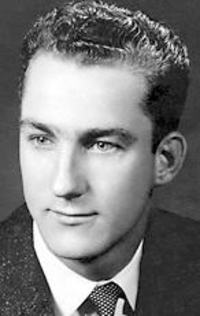
Donald William Shunn My deepest thanks to everyone who posted or called or sent cards on the occasion of my father's passing. (Well, to everyone but the ones who tried to use the opportunity to reassure me of the reality of the afterlife. Bad time to make your dubious point.) The sympathy and concern were very touching and very much appreciated.

Laura and I returned Saturday from the funeral, which was held in Kaysville, Utah, the town where my parents have lived for 28 years. The funeral was a curiously joyful affair for the family, though punctuated of course by bouts of deep grief. My mother seemed to be doing better than just about anyone else, as if the burden of my father's long illness had at last been lifted. Relatives—and I have a lot—and friends came from far and wide, and many, many folks from the ward where I grew up dropped in for the viewing and/or service as well.

It was hard to walk from one end of the church to the other without being delayed an hour by people wanting to talk. I enjoyed seeing everyone and catching up, but this was also unfortunate in that it prevented me from getting to the men's room before the funeral service began. As a pallbearer, I didn't have a chance to slip away at the end of the service, either. So it was off to the cemetery in a limo for the interment and then back to the church, before sweet relief could be obtained. A short four hours.

My two brothers, Tim and Lee, spoke at the funeral, as did a former bishop who is a close friend of the family. My brothers' remarks were excellent, though I frequently found myself wishing I'd known the person they were talking about better. My brothers are Siblings Five and Six, which means they grew up in a different Family Era from the four oldest, and very different from My Era, the Epoch of the Firstborn.

The former bishop who spoke is someone I knew very well when I was a teenager and a lost young man in my early twenties. He too spoke about a man I didn't know well, but whose generosity of spirit I certainly witnessed from afar. My father had a gift for connecting with troubled and disadvantaged youths, though in my case a different set of expectations probably interfered with that ability. (For my listing as a pallbearer in the printed program, I deliberately chose to be called "Donald William Shunn II," a name I have not used for well over a decade, probably because it gives me a claim on a connection no one else has with him. I sure would have liked to have connected over a beer, though.)

I cried several times during the service, though not when I was wondering what was wrong with me that I could never connect with the man the way everyone else seemed to have, and certainly not during the part's of the bishop's remarks that seemed directed explicitly at we four scattered siblings (a solid fifty percent of the total) who have broken the celestial family chain by removing ourselves from the Mormon faith. During those interminable parts I gritted my teeth and clenched my sphincters.

I was very glad to have Laura with me, though she was rather discomfited to have seen my father's dead body lying in its casket dressed in Mormon temple robes.

My extended family is vast enough when you count only blood relatives, but to this dense tree must be added the couple who took my father under their wings in his early twenties, after both his parents has died. This was the couple I knew growing up as Grandpa and Grandma Stone, who between them had twelve children of their own—eleven from previous marriages, and one together. At the Relief Society luncheon that followed the interment, I spent an inordinate amount of time greedily lapping up stories about my father from one of the eldest of these, Stephen Stone. Stephen also told me what it was like to grow up in the house of his father, a respected psychologist and minor Mormon celebrity. It was a side of Grandpa Stone I'd never heard before, and the parallels to me and my father were downright eerie. I had to wonder if my father hadn't picked up a good number of his early parenting techniques from Grandpa Stone.

At a Mormon funeral, particularly one filled with people you haven't seen in nearly two decades, religious faux pas are bound to be made. There was the older man (another former bishop!) who mildly scolded me for wearing a beard, and who, when told we lived in Chicago, could only reminisce about the time he looked down from the top of the Sears Tower and thought, "Look at all those people! So many to convert!"

That drew only an appalled stare from me and Laura, but my proudest moment actually came at graveside shortly after my father's interment. The bishop who had spoken at the funeral, a man I really do love and respect a great deal, and who I'm sure many times heard my father agonize about my apostasy, held me by the arm and, after expressing his sympathy for my loss, fixed me with an intense stare and said, "It's true, you know. Deep down you know it, don't you."

"I don't," I said, and as he swept me into a tight embrace (was he afraid to look me in the eye at that moment?), I went on, "Cal, I'm like my father that way. I can't say something that I don't believe, and I don't believe it."

"Think about it for me from time to time," he said.

"I think about it all the time," I said.

He nodded. "We can still be friends, though, right?"

"Of course," I said.

That evening, because my father had come out of one of his final fogs long enough to ask if Mom would still be all right after the $2,000 pizza party (okay, maybe he hadn't emerged all the way from that fog), we had a raucous pizza party at my parents' house. Laura and I are on a diet that doesn't permit pizza, but we had some anyway, and it was good.

death | family | father | mormonism | religion | temple

1 2  

Featured Book

William Shunn

About This Archive

This page is an archive of recent entries in the family category.

faith is the previous category.

fan mail is the next category.

Find recent content on the main index or look in the archives to find all content.

Archives