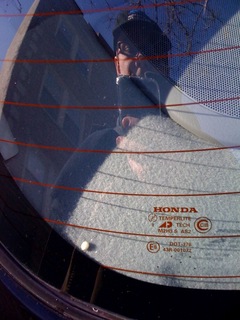
Being a jumbled representation of the author

Main

death

April 11, 2012

Biking on Bryn Mawr

Biking on Bryn Mawr Avenue,
clear sky, afternoon sun,
I pull over to the curb
for the ambulance
hurtling my way.

But it turns on Clark,
and as I pass through
the intersection I see
the gapers gathered,
the body in the street,
face down, lying twisted
like a crash-test dummy.

I have to look.
But I can't look.
I make myself not look,
face forward into traffic,
lest I become the thing
I gaze upon.

bicycling | chicago | city life | death | poems

January 19, 2012

Ella-gy

Dog at my knee Ella has now possibly ruptured her other CCL (cranial cruciate ligament, analogous to the ACL in humans). She's on tramadol for the pain (an anti-inflammatory would be better but they're really tough on her digestive system) and on limited activity for a week or more. This is actually good news, though, because when I described Ella's symptoms the vet's gut hypothesis was arthritis. Fortunately, the physical exam and X-rays did not support that diagnosis.

But those few moments of facing the prospect of arthritis only reinforce the sad knowledge that Ella is getting older. She's eight years old, well into middle age for a dog, and though we joke (somewhat desperately) that she has another thirty or forty years left in her, we know that's not the case. (It's more like fifty.)

News organizations keep obituaries of public figures ready to go, just in case. I keep thinking that I should start working on Ella's obituary now because I'll be in no shape to do it when it's needed. We are no respecters of species here—Ella is the third person in our family, and I know that when I have to write that blog entry I'm going to leave out some of the important details of her life and personality that I want so much to preserve.

There's the slight crookedness of her spine, which means that when you're walking behind her in a straight line you can see how her hindquarters are angled a couple inches to the right. There's the way she decides some mornings that she wants to walk all the way to the lakeshore and resists all attempts to turn her from that eastward path with a withering staredown. Pick your furry friends wisely There's the way she often misses the first step when she goes charging up the back stairs. There's the way, when she has a toy in her mouth, that she likes to bash you in the backs of the legs so you'll keep playing tug with her—even if that toy happens to be a stick three feet long and perfectly positioned to take you out at the knees. There's the way that she'll try to pick up even a huge fallen willow bough to drag around with her at the park. There's the way she can't control herself when you reach for the plastic bag with her basketball inside and starts hurling herself into the air to bite at it. There's the way that she invented her own game to play with that basketball, chasing it so she can push it around with her face. There's the way she kicks back dirt in every direction but the direction where she left her droppings. There's the way she loves to tease other dogs when they're leashed and she's not. There's the way she sometimes goes on a tear at the park and runs in huge figure-eights for the sheer joy of it. There's the way, when it snows, that she can't seem to walk four feet without throwing herself down on her back and wriggling around in the powder. There the way, when she hasn't eaten her breakfast, that the urgent devouring of it suddenly sidetracks her when we're trying to usher her out the back door. There's the way that, if we give her a treat before leaving her alone at home, she won't eat it until one or the other of us has returned. There's the way she scratches at the hardwood floor like making a nest before she collapses onto her side and curls up. There's the way she sighs and rests her chin on your knee while you're reading on the couch.

I have to make myself stop now, because I could just keep going. Just like Ella is going to, dammit.


While we're on the topic, some of you have wondered how I get so many good photos of Ella. The answer is, I take about ten times as many as I ever put online, and when I see Ella do something unbearably cute I try to make her do it again so I can capture it. This picture of Ella examining a toadstool, for instance? Totally restaged.

If you're curious to see what sometimes happens behind the scenes on an Ella photo shoot, this video should give you some idea. I'm not actually taking photos of her here (I'm shooting video, duh), but I am trying to incite her to keep doing cute things over and over again when she's clearly ready to go home already. Oh, well. At least she sleeps well after a play session like this.

death | dogs | ella | photographs | video

September 11, 2010

Immortality

I have no illusions of immortality

Or do I?

The way I shovel known poisons into my mouth
Shout motherfucker at drivers who cut me off
The way I still haven't put up the smoke alarms, two years later

The way I keep putting off Moby-Dick
Let a day or more sometimes go by without writing a word
The way I, on rare occasions, neglect to say I love you

death | family | love | mortality | poems | writing

March 5, 2010

Deception

This morning in the back window of the car
I found a ladybug
bleached bone-white and fragile under the glass,
like a tiny skull.

With eyespots faded almost to nothing,
blinded by the sun,
it was as if the creature had only slowly,
and jealously,

let go of the urge to outwit its predators.


Ladybug

death | insects | poems

June 23, 2008

Seven words for the morning news

Shit piss fuck cunt cocksucker motherfucker tits.

comedy | counterculture | death | icons | profanity

June 14, 2008

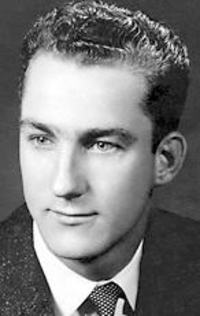
Remembering Algis Budrys

It was a simple drive twelve miles north this morning to get to Skokie for Algis Budrys's memorial service. Laura was unable to join me so I went alone, and I found when I arrived at the funeral home that there was no one there I knew. Actually, I did meet Ajay's dear wife Edna back in 1985, but I wouldn't have expected her to remember that brief occasion all these years later.

I don't do very well in crowds where I don't know anyone—heck, I can get intimidated in crowds where I do know people—so I sort of slinked around at the back of the room, feeling somewhat like an intruder. Two display tables helped me occupy myself. One was covered with an arrangement of various editions of Ajay's books. The other displayed a selection of interviews with and articles about him, both from print sources and online. On a widescreen television ran a slideshow of photos of Ajay and his family.

The service began not long after I arrived, and I found a seat toward the back. There were fifty or sixty people in attendance, I would estimate, and the number of chairs for everyone was almost exactly right. A pastor spoke for a few minutes about Ajay's greatness as a husband and a father and a writer, and offered a prayer. Then she turned the time over to Ajay's sons.

Algis J. Budrys Jeff shared remembrances and appreciations of Ajay he had gathered from people online over the preceding few days. Among the poignant, funny, and just simply factual snippets he read, I was startled to hear a line I had written in a brief post on Monday. Tim expressed his good fortune at being able to spend many of his adult summers with his parents' house as a home base, and shared an observation an associate at a Renaissance fair had made—that no wonder he seemed so even-keeled, with parents who had always stayed together. Dave recounted the last years and final days of Ajay's life, when despite setback after setback, Ajay had remained cheerful and become even more of a sweet man. All three sons credited their parents with giving them the space to do their own thing—as long as they did something. There was also much talk of Ajay's prowess as a bicycle builder and mechanic—the boys grew up having by far the best bikes around, at a time when 10-speeds were still exotic—and stories like the time he singed his eyebrows off cleaning bike parts with gasoline.

After the boys spoke, Edna offered a few words in tribute to Ajay's humor and wit. She also recounted how, when they were young and living in New Jersey and playing a regular penny-ante poker game with Fred Pohl and others, they would all pay their poker debts to one another first anytime a check for a story arrived in the mail.

Next the pastor opened the service to remembrances from anyone who cared to share them. We heard moving and amusing stories both, from people like the massage therapist who worked with him the last three years of his life, the neighbor who eventually went into politics with Ajay as a close supporter and publicist, the young man to whom Ajay was a surrogate father figure, the director of the Writers of the Future contest who had worked with him for 24 years, the friend who first met Ajay in the '50s in the Philadelphia Science Fiction Society, the younger cousin whose family were fellow immigrants, and more.

Finally, after some internal wrestling, I stood up. You might not know it if you've heard me speak, but it terrifies me to talk in front of a group unprepared, especially a group of strangers. But none of Ajay's students had spoken up yet, and I thought at least one should. What I said, more or less, was that despite only really knowing Ajay for a few weeks during the summer of 1985, he'd had a profound influence on my early development as a writer, as he no doubt had on thousands of others. I said that what I carried with me was not just the serious lessons about writing that he imparted, but also the demented childlike glee in him that would manifest at the oddest times.

Algis J. Budrys & Damon Knight with water guns I recalled the epic water fights of our Clarion workshop, and Ajay squaring off against Damon Knight with water guns at our final barbecue. What dangerous opponents they were to any who crossed them! And I recounted a scene that is seared into my brain, how when Ajay spied a blue stuffed rabbit that seemed to show up as a Clarion mascot year after year, he got a demonic look in his eye, hissed, "I ... hate ... that ... rabbit!", and proceeded to bite, kick, and bludgeon it into oblivion. "If you knew Ajay at all," I said, "you can imagine what a startling sight it was to see him jumping up and down on that stuffed bunny."

What I learned from this, I said, was to try to remember to keep a spirit of fun about me, even when engaged in work what I consider to be serious work. I managed to get through my two minutes without resorting to a tissue, though it was a close thing.

After a couple of more remembrances, the mourners filed past the open casket one last time—Ajay looked about as good as anyone I've seen in that situation, with a very short, neatly trimmed white beard—before retiring to the parking lot. Edna thanked me for what I had said, which put me at something of a loss for words.

I had to be back home, so I didn't join the procession to the cemetery for the interment, but I trust it was as lovely and bittersweet a ceremony as the service at the funeral home. I will leave it to others to remark on Ajay's importance to the field of science fiction, but I can only remark right now on his importance to my science fiction. I'll never forget him because he was the first person to, with authority, give me serious reason to think I might really be capable of becoming a professional writer. In his curmudgeonly way, he told me I wasn't close to there yet, and he certainly let me know it was going to be a difficult process, with only a small likelihood of flashy rewards, but he let me know I had the potential.

One last thing I will never forget is how, on the last day of Clarion, Ajay brought to me a copy of the souvenir book we students had made with a selection of our stories, and almost shyly asked if I would sign it. Of course, all of us were signing one another's copies, like yearbooks, but there was just something in Ajay's approach to asking that made me feel like a king. I was seventeen, and he was a Golden Age giant, but he made it seem like those designations didn't matter. And they didn't.


I've started scanning some of my photos from Clarion '85, including what I think are some nice ones of Ajay and Edna.

clarion | death | memories | science fiction | writing

June 12, 2008

Tapped human side

Here's an article about Algis Budrys that ran in yesterday's Chicago Tribune:

Tapped human side of science fiction

I'm going to head out to Skokie for the service Saturday morning.

death | science fiction | teachers | writing

June 9, 2008

R.I.P. Algis J. Budrys, 1931-2008

I just heard from Geoff Landis that Algis Budrys passed away this morning. He was one of the great writers, editors, critics, and teachers of science fiction, and as the first week's instructor for my Clarion class in 1985, he certainly had a profound influence on my early development as a writer. I'm very sad to hear this news, especially given that I now live so close to Evanston, Illinois, where he made his home for so long.

I've pulled Rogue Moon down from the shelf and intend to start re-reading it tonight, something I've meant to do for a very long time.

clarion | death | science fiction | writing

March 17, 2008

ShunnCast #51

Epidode #51 of "ShunnCast" is now available, in which Donald William Shunn II remembers the original model (1936-2008).

http://www.shunn.net/podcast?id=51

See also [info]shunncast.

death | father | mormonism | podcasts | radio | religion | utah

I don't believe it: a rambling reminiscence from my father's funeral

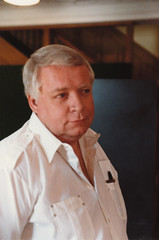
Donald William Shunn My deepest thanks to everyone who posted or called or sent cards on the occasion of my father's passing. (Well, to everyone but the ones who tried to use the opportunity to reassure me of the reality of the afterlife. Bad time to make your dubious point.) The sympathy and concern were very touching and very much appreciated.

Laura and I returned Saturday from the funeral, which was held in Kaysville, Utah, the town where my parents have lived for 28 years. The funeral was a curiously joyful affair for the family, though punctuated of course by bouts of deep grief. My mother seemed to be doing better than just about anyone else, as if the burden of my father's long illness had at last been lifted. Relatives—and I have a lot—and friends came from far and wide, and many, many folks from the ward where I grew up dropped in for the viewing and/or service as well.

It was hard to walk from one end of the church to the other without being delayed an hour by people wanting to talk. I enjoyed seeing everyone and catching up, but this was also unfortunate in that it prevented me from getting to the men's room before the funeral service began. As a pallbearer, I didn't have a chance to slip away at the end of the service, either. So it was off to the cemetery in a limo for the interment and then back to the church, before sweet relief could be obtained. A short four hours.

My two brothers, Tim and Lee, spoke at the funeral, as did a former bishop who is a close friend of the family. My brothers' remarks were excellent, though I frequently found myself wishing I'd known the person they were talking about better. My brothers are Siblings Five and Six, which means they grew up in a different Family Era from the four oldest, and very different from My Era, the Epoch of the Firstborn.

The former bishop who spoke is someone I knew very well when I was a teenager and a lost young man in my early twenties. He too spoke about a man I didn't know well, but whose generosity of spirit I certainly witnessed from afar. My father had a gift for connecting with troubled and disadvantaged youths, though in my case a different set of expectations probably interfered with that ability. (For my listing as a pallbearer in the printed program, I deliberately chose to be called "Donald William Shunn II," a name I have not used for well over a decade, probably because it gives me a claim on a connection no one else has with him. I sure would have liked to have connected over a beer, though.)

I cried several times during the service, though not when I was wondering what was wrong with me that I could never connect with the man the way everyone else seemed to have, and certainly not during the part's of the bishop's remarks that seemed directed explicitly at we four scattered siblings (a solid fifty percent of the total) who have broken the celestial family chain by removing ourselves from the Mormon faith. During those interminable parts I gritted my teeth and clenched my sphincters.

I was very glad to have Laura with me, though she was rather discomfited to have seen my father's dead body lying in its casket dressed in Mormon temple robes.

My extended family is vast enough when you count only blood relatives, but to this dense tree must be added the couple who took my father under their wings in his early twenties, after both his parents has died. This was the couple I knew growing up as Grandpa and Grandma Stone, who between them had twelve children of their own—eleven from previous marriages, and one together. At the Relief Society luncheon that followed the interment, I spent an inordinate amount of time greedily lapping up stories about my father from one of the eldest of these, Stephen Stone. Stephen also told me what it was like to grow up in the house of his father, a respected psychologist and minor Mormon celebrity. It was a side of Grandpa Stone I'd never heard before, and the parallels to me and my father were downright eerie. I had to wonder if my father hadn't picked up a good number of his early parenting techniques from Grandpa Stone.

At a Mormon funeral, particularly one filled with people you haven't seen in nearly two decades, religious faux pas are bound to be made. There was the older man (another former bishop!) who mildly scolded me for wearing a beard, and who, when told we lived in Chicago, could only reminisce about the time he looked down from the top of the Sears Tower and thought, "Look at all those people! So many to convert!"

That drew only an appalled stare from me and Laura, but my proudest moment actually came at graveside shortly after my father's interment. The bishop who had spoken at the funeral, a man I really do love and respect a great deal, and who I'm sure many times heard my father agonize about my apostasy, held me by the arm and, after expressing his sympathy for my loss, fixed me with an intense stare and said, "It's true, you know. Deep down you know it, don't you."

"I don't," I said, and as he swept me into a tight embrace (was he afraid to look me in the eye at that moment?), I went on, "Cal, I'm like my father that way. I can't say something that I don't believe, and I don't believe it."

"Think about it for me from time to time," he said.

"I think about it all the time," I said.

He nodded. "We can still be friends, though, right?"

"Of course," I said.

That evening, because my father had come out of one of his final fogs long enough to ask if Mom would still be all right after the $2,000 pizza party (okay, maybe he hadn't emerged all the way from that fog), we had a raucous pizza party at my parents' house. Laura and I are on a diet that doesn't permit pizza, but we had some anyway, and it was good.

death | family | father | mormonism | religion | temple

William Shunn

About death

This page contains an archive of all entries posted to Inhuman Swill in the death category. They are listed from oldest to newest.

dead things is the previous category.

deaths is the next category.

Many more can be found on the main index page or by looking through the archives.

Copyright © 1995-2012 by William Shunn.
All rights reserved, except where explicitly specified otherwise.
write to feedback AT shunn DOT net